Visit Ferrara - Central Italy
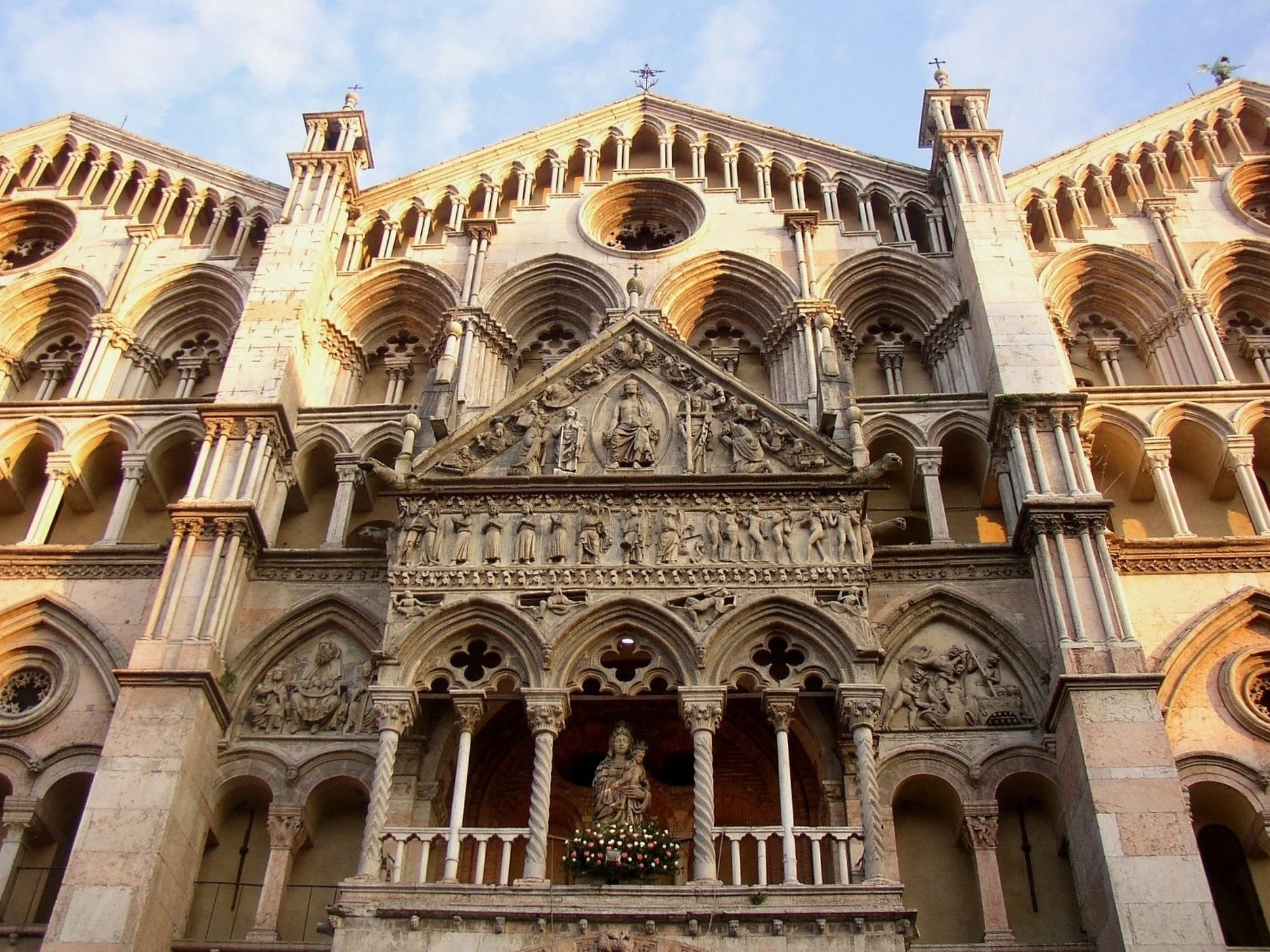
Ferrara, “The Grand Lady of the Po” (river). (Alessandro Tassoni)
Suggested stay - 4 days/3 nights
This is a beautiful town in Emilia-Romagna, just 20 minutes from Bologna, which I know very well because I lived there for a while.
The history of Ferrara is inextricably linked to the House of Este, who transformed a small medieval village into a refined jewel of the Renaissance. Recognised as a UNESCO World Heritage Site, the city retains its charm as “Europe’s first modern city”.
Key Milestones
Origins (753 AD): The earliest written records date back to the year 753, when the Lombard king Astolfo mentioned the town in a document. It originally developed as a fortified Byzantine camp to defend Ravenna.
In the Middle Ages, the city was marked by the bloodshed between the Guelphs and Ghibellines, until the Este family finally seized power in 1242.
Between the 15th and 16th centuries, during the Este Renaissance, Ferrara became a European beacon for the arts and culture, hosting geniuses such as Ludovico Ariosto, Torquato Tasso and Nicolaus Copernicus.
In 1598, the Este family was forced to move to Modena, and Ferrara became part of the Papal States, gradually losing its role as a capital and experiencing a period of economic stagnation.
Since the unification of Italy in 1865, the city has been characterised by a strong political and cultural fervour, becoming an important agricultural, industrial and academic centre.
Must-see sights in Ferrara include the majestic Castello Estense, a fortress with a moat in the heart of the city. Inside, you can visit the historic prisons and frescoed halls, and climb the Torre dei Leoni for a panoramic view. Also worth seeing are the geometrically designed Palazzo dei Diamanti and the charming medieval atmosphere of Via delle Volte. The city is easily explored on foot or by bike, clearly divided between its medieval centre and the extensive Renaissance Addizione Erculea.
If you have time, the National Archaeological Museum (housed in a magnificent 16th-century palace with a garden) and the evocative silence of the former Jewish Ghetto with its characteristic narrow streets are also well worth a visit.
Important historical note:
Pomposa Abbey, situated in the municipality of Codigoro (in the province of Ferrara), is an absolute masterpiece of Romanesque art and one of the most important Benedictine monastic complexes in northern Italy. Originally founded between the 6th and 7th centuries, it reached its peak of splendour after the year 1000, becoming a European cultural and religious beacon.
It was within the walls of Pomposa that, at the beginning of the 11th century, the monk Guido d’Arezzo invented modern musical notes, laying out the musical notes system (the tetragram). The notes were six, ut-re-mi-fa-sol-la.
Ferrara’s cuisine has aristocratic origins dating back to the court of the Este family, characterised by rich flavours, contrasts between sweet and savoury, and extensive use of egg pasta.
No guide to this wonderful city would be complete without a culinary section on what to eat and drink in Ferrara.
Cappellacci di Zucca: The city’s signature dish. These are large egg-based tortelli filled with oven-roasted violina squash, Parmigiano Reggiano, breadcrumbs and nutmeg. They are traditionally served with a rich meat ragù or dressed with butter and sage.
Pasticcio di Maccheroni: A remarkable expression of the Renaissance sweet-and-savoury contrast. It consists of a shell of crumbly sweet shortcrust pastry filled with macaroni, white meat ragù, béchamel sauce, mushrooms and truffle.
Cappelletti in Brodo: Smaller than cappellacci and with a savoury meat filling (pork, veal or capon), they are served strictly in a piping hot, clear meat broth.
Traditional Cured Meats
Salama da Sugo: A pork sausage strongly flavoured with red wine (often Lambrusco), cloves, cinnamon and pepper. It is aged for at least a year and boiled for hours. It is served piping hot, resting on a soft bed of mashed potatoes which tempers its intense spicy flavour.
Zia Ferrarese: The local cured meat par excellence. It is a large garlic salami, with a soft texture and an unmistakable aroma, perfect to enjoy as a starter.
Baked Goods and Desserts
Coppia Ferrarese (Ciapa): The city’s traditional bread, protected by the PGI designation. It has a distinctive cross-shaped form, consisting of a soft central body (the mochin) and four rolled-up croissants, which are extremely crispy and crumbly.
Tenerina: A flat cake with an extremely soft and moist centre, made with very little flour, eggs, butter and plenty of dark chocolate. It forms a thin, fragrant crust on the outside.
Pampepato (or Panpepato) di Ferrara: The Christmas dessert, also PGI-protected. It is a dome-shaped cake rich in almonds, hazelnuts, candied fruit and spices (including pepper), entirely covered in a layer of extra dark chocolate.
The unique wines of this region.
The wines of the Ferrara region have historically been known as ‘I Vini delle Sabbie’ (The Wines of the Sands), protected by the Bosco Eliceo DOC designation. This name derives from the unique terroir of the Po Delta Park, where the vines grow in soils composed of up to 95% marine sand. The high sand content has historically protected the plants from phylloxera, allowing not-grafted vines (not grafted onto American rootstock) to survive, giving the wines a distinct salty and mineral character.
A fortress town best explored by bike or on foot, for those who love slow tourism; it is no coincidence that it is the Italian city with the lowest number of heart attacks or heart disease, thanks to its lifestyle.
Long live the good life, “la dolce vita”, as Federico Fellini would have said: life is a combination of magic and pasta.
This gem is a destination during our Northern Italy tour. (click here for more)