
A Bit of History: The Palio di Siena
Nearly 800 years before anyone called it a tourist attraction
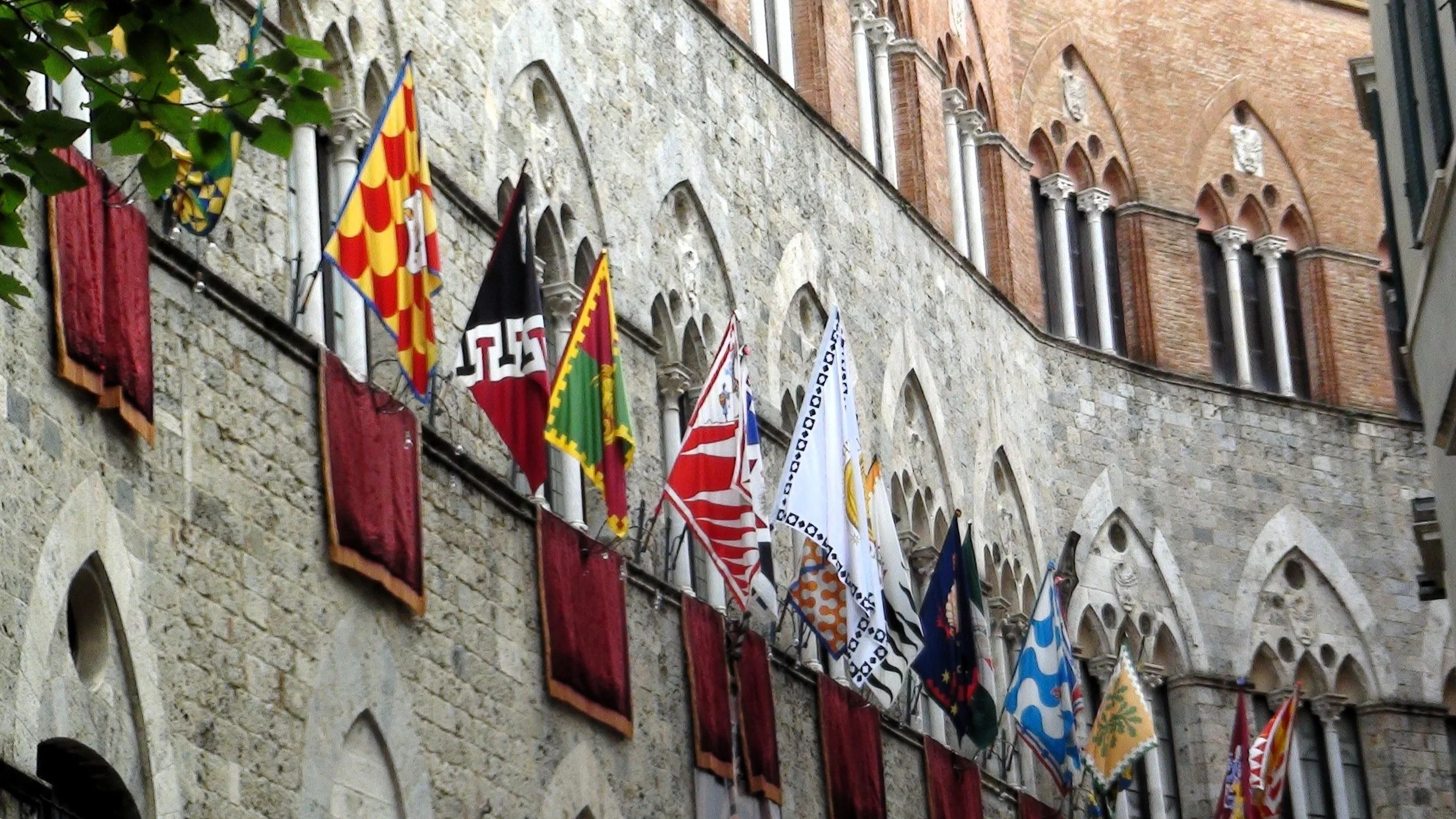
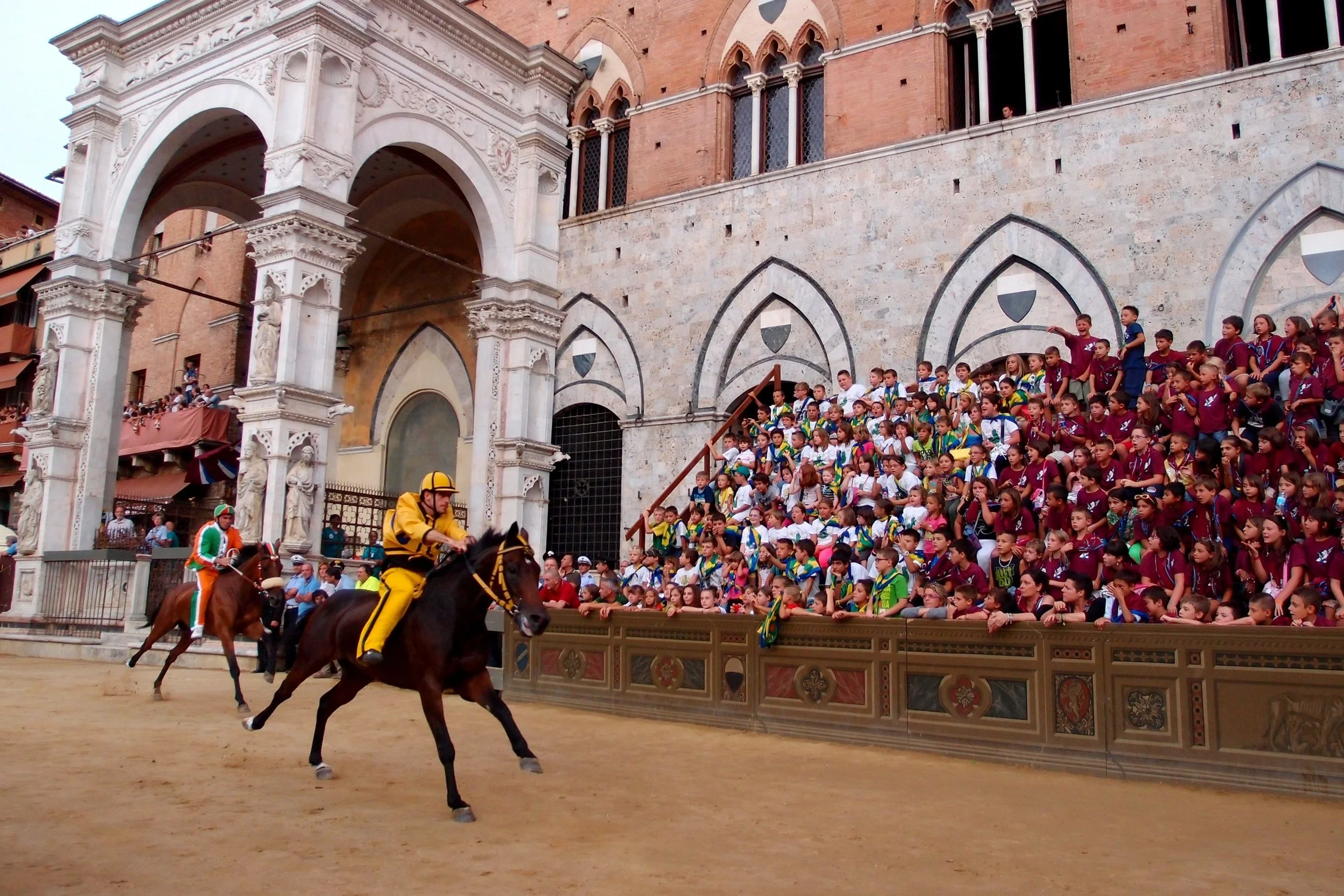
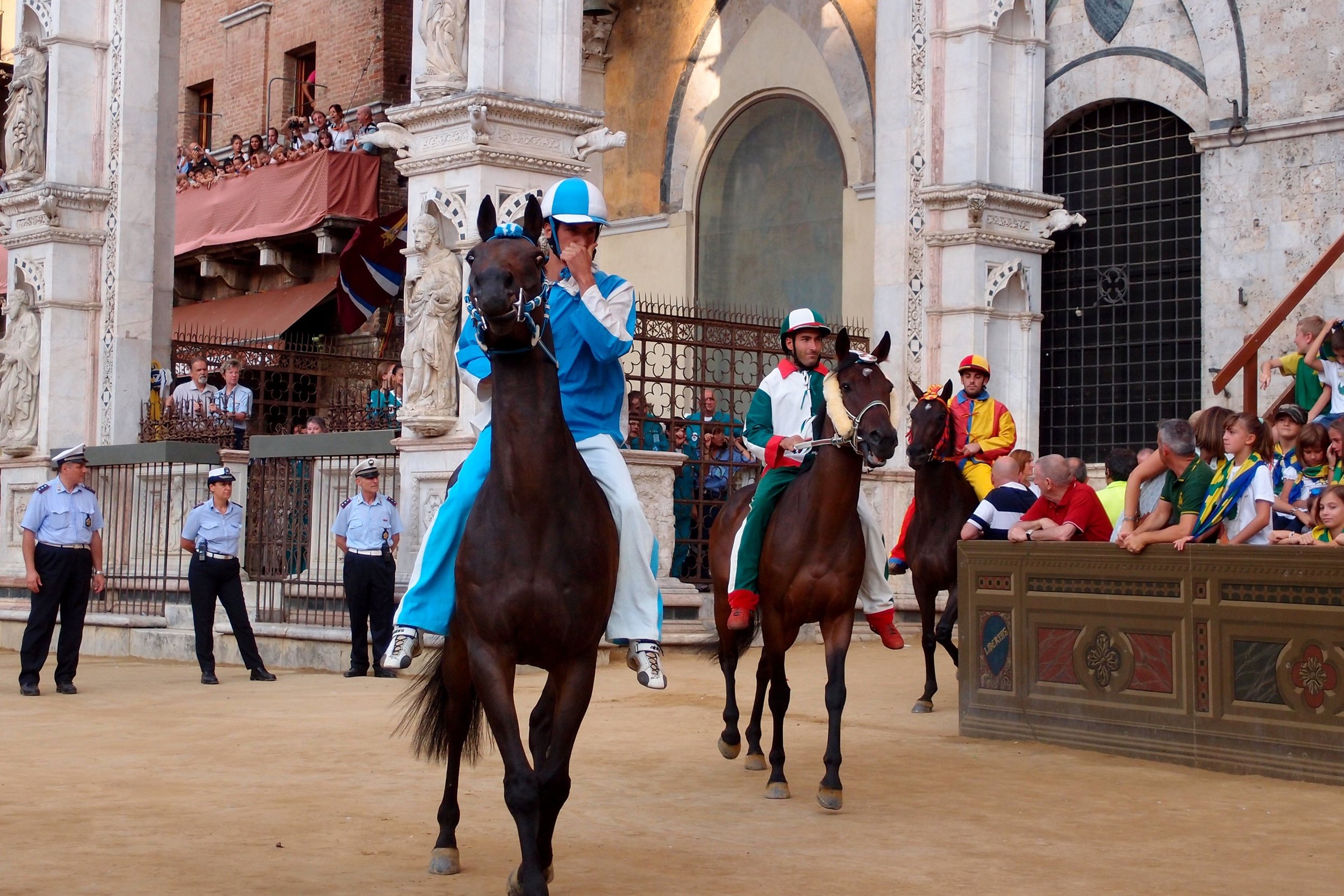
There’s a particular kind of person — usually a tourist, usually loud about it — who will tell you, with total confidence, that the Palio di Siena is “basically a show for visitors.” A pageant. A bit of theater put on for the cameras.
I always want to ask: theater for whom, exactly? Because nobody was filming anything in 1239. (click here for more)
That’s the year the earliest documented Palio appears in Sienese records — not the Palio as we picture it today, galloping bareback around the Piazza del Campo, but its ancestor: the Palio alla lunga, a straight-line race run through the city streets from the Porta Romana gate to the cathedral.
It was run on August 15th, the Feast of the Assumption, and it was the climax of what was essentially the Sienese Republic’s national holiday — the day the towns and castles under Siena’s rule sent candles to honor the Madonna, their queen and protector. The race was the finale. The fireworks at the end of the show, except the show was devotion, not spectacle for outsiders.
The word “palio” itself comes from the Latin pallium— a length of precious fabric, the prize draped over the winner in an era when silk meant something. Centuries before anyone thought to put “tourist attraction” and “Tuscany” in the same sentence, Sienese nobles were already racing their Berber thoroughbreds for the honor of that cloth, ridden by professional jockeys with nicknames as colorful as the contrada colors that would come later.
And here’s where the story gets interesting — because the Palio didn’t stay a noblemen’s game. By the late 1500s, the bull hunts that had been the contrade’s main event were losing steam, and the city’s neighborhoods started organizing their own races instead, run through their own streets. This is the real turning point. The Palio stopped being something nobles did for the city and became something the city’s neighborhoods did to each other — a contest of pride, not patronage.
The geography changed too, but not for show. At the start of the 1600s, the race moved into the Piazza del Campo — not to give spectators a better view, but because galloping horses at full speed through narrow medieval streets was, unsurprisingly, getting people killed. Safety, not spectacle, moved the Palio into the shell-shaped piazza we know today.
By July 2, 1652, the format had crystallized into something recognizably modern: the contrade, not the nobility, chose their own jockeys. Four years later, the Provenzano race — honoring a different Marian devotion specific to Siena — ran for the first time. It took until 1774 for the city to formally recognize both races, July and August, as the fixed annual calendar, after a playful gesture: the Oca contrada, having won in 1701, offered the others a kind of rematch in August. The other contrade said yes, and the tradition stuck.
None of this was built with a foreign audience in mind. It couldn’t have been — Siena in the 1600s wasn’t fielding hotel inquiries from abroad. It was governing itself, defending itself, and finding ways for seventeen fiercely proud neighborhoods to settle their rivalries somewhere short of actual warfare. The Palio was the outlet. It still is.
And if you need proof that the Palio was never sanitized for outside approval, just watch one. There are no saddles. A horse can lose its rider entirely and still win the race — a cavallo scosso, they call it, the riderless horse, and it counts. Everyone in Siena will tell you, without much shame, that bribery between jockeys is part of the unspoken rulebook. This is not what a town builds when it’s trying to look good for visitors. This is what a town keeps when it doesn’t particularly care what visitors think.
That’s the part I’d want that tourist to sit with. The Palio wasn’t designed for them. They arrived nearly 800 years after the fact, hoping to understand something that was never theirs to begin with — something built, fought over, and kept alive entirely by the people who call those seventeen contrade home.
You don’t get to walk into someone else’s 800-year-old family argument and call it a show.
Arrivederci, (‘til we meet again)
Mic