Shopping tips and advice when in Italy
Shopping in Italy and visiting? Don't make these mistakes.
I live in Italy. I've watched tourists lose money, get fined, have their food confiscated at customs, and carry home broken ceramics and fake leather — all because nobody told them how shopping actually works in this country.
The 15 shopping rules .
This is everything you need to know.
1. BUYING COUNTERFEIT GOODS
Those guys selling "Gucci" bags on a blanket on the street in, Milano, Florence, Rome, Venice, Naples? Walk past. Fast.
In Italy it's illegal to BUY counterfeit goods. Not just sell them. The fine is €100 to €7,000. Plainclothes police actively watch the sellers and fine the BUYERS.
The sellers run when they see police. That should tell you everything.
And the quality is terrible. Cheap fabric interiors, crooked stitching, glued together. You'll never use it.
The organized crime networks behind these sellers exploit immigrants as foot soldiers. Your €20 doesn't go where you think it goes.
2. FAKE LEATHER IN FLORENCE
Florence is the leather capital of Italy. But the markets around San Lorenzo are full of bags and jackets that aren't Italian leather — and sometimes aren't leather at all.
How to tell:
— Real leather smells like leather. Fake leather smells like chemicals.
— Real Italian leather is soft but strong. Fake feels plasticky.
— If a "leather" bag costs €25, it's not leather.
— Turn it over. Check the back of the material. Real leather has a rough, fibrous backside. Fake has a smooth fabric backing.
Where to buy real Florentine leather: the Scuola del Cuoio (Leather School) inside Santa Croce church. They make everything on site. You watch them work. Or buy from established shops that can tell you exactly where the leather was tanned.
Ask "È pelle vera italiana?" (Is it real Italian leather?) and watch their face.
3. FAKE MURANO GLASS IN VENICE
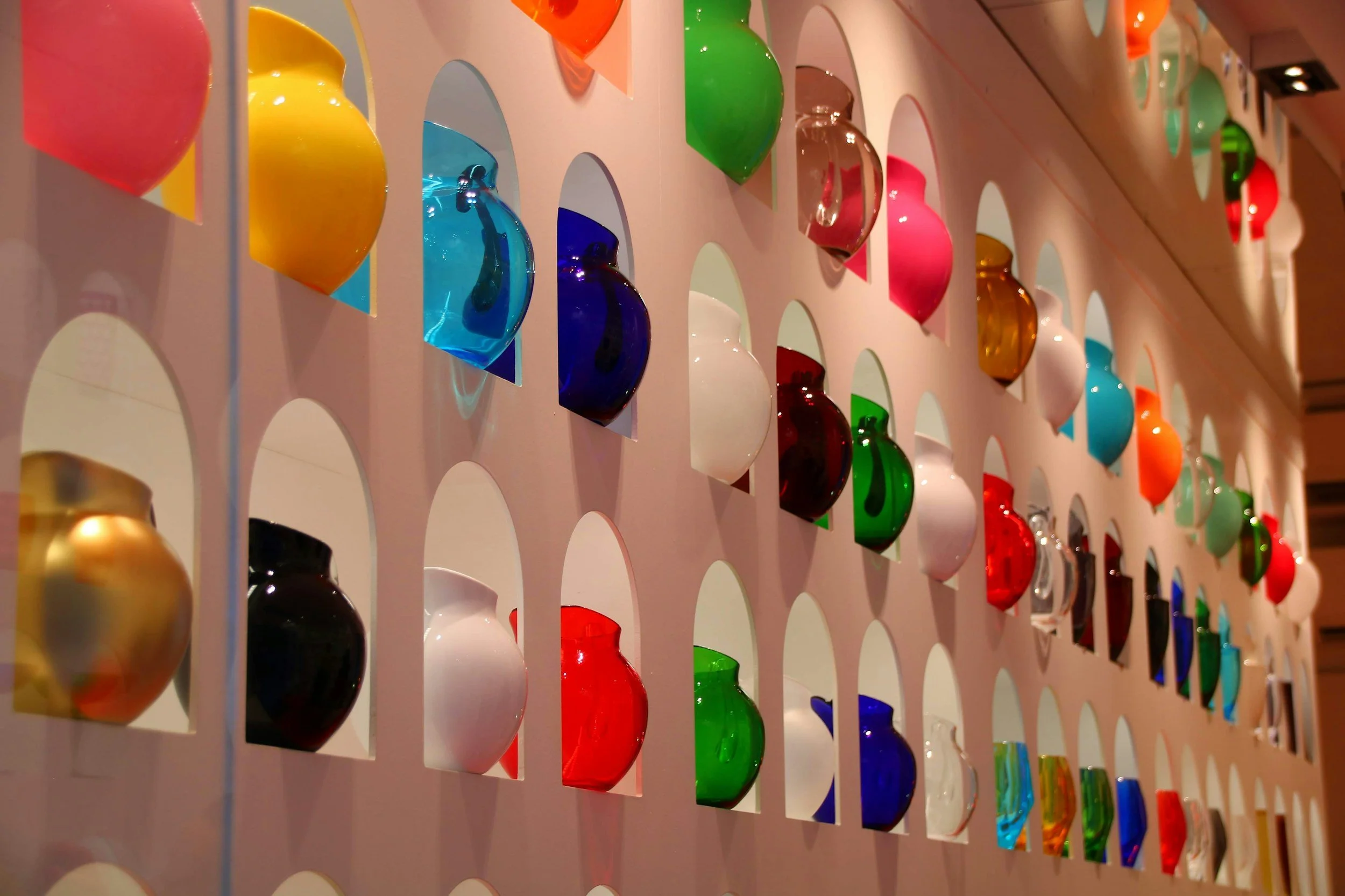
Most "Murano glass" sold in Venice and Murano souvenir shops is mass-produced in China. Shipped in containers. Sold as "authentic."
Real Murano glass is handmade on the island of Murano by master glassblowers. It takes years of training. A single piece can take hours. That's why it costs what it costs.
How to spot real Murano:
— Look for the "Vetro Artistico Murano" trademark sticker (a logo of a furnace).
— Real pieces have tiny imperfections. Small bubbles. Slight asymmetry.
— If every piece on the shelf looks identical, it's factory made.
— If it costs €5, it's not from Murano.
— Visit Murano itself. Watch the glassblowers work. Buy from the source.
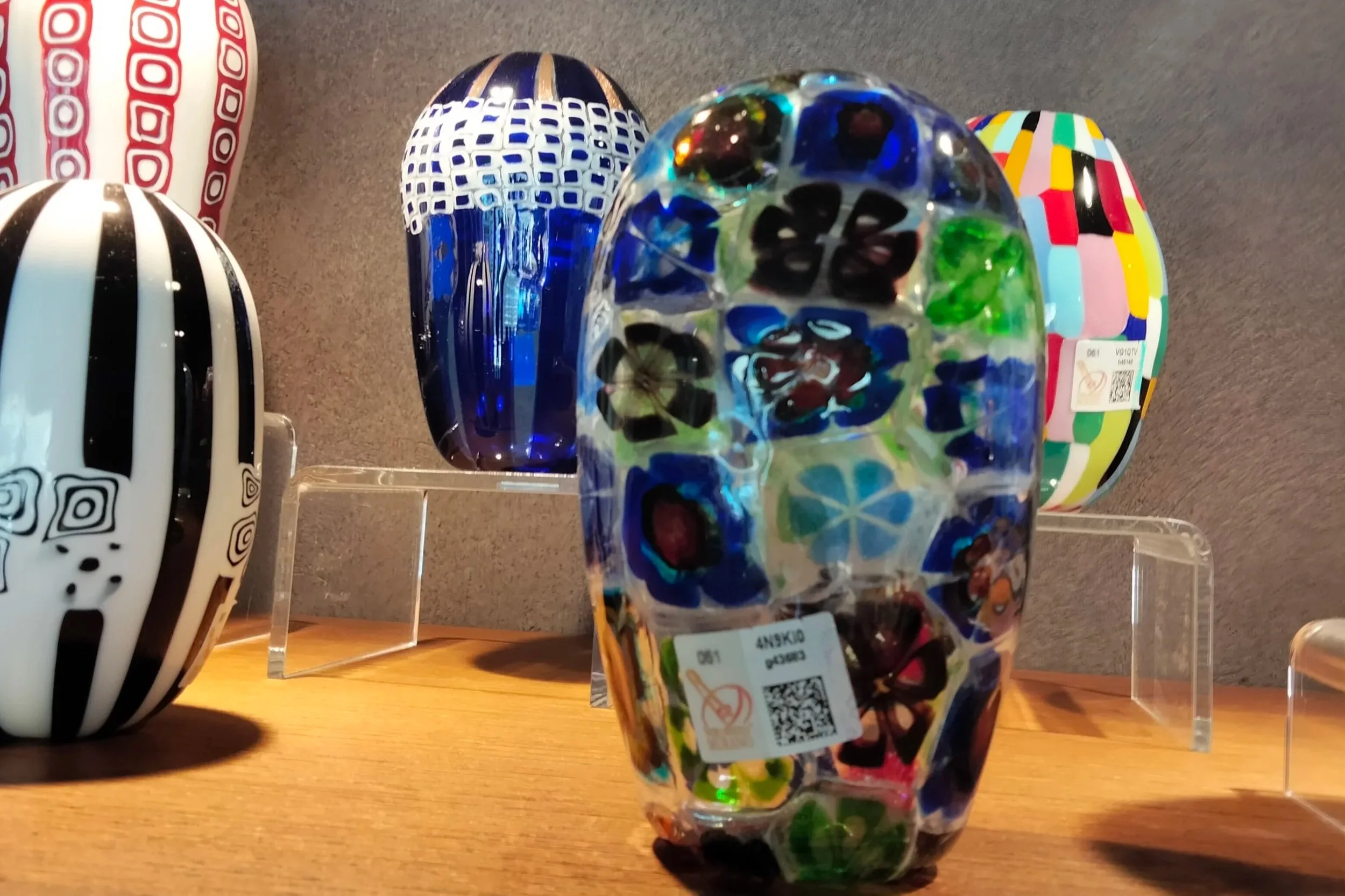
Scan the QR code, made in Venice.
4. "MADE IN ITALY" DOESN'T MEAN WHAT YOU THINK
EU law allows products to be labeled "Made in Italy" if the LAST significant processing step happened in Italy. A bag cut and sewn in Italy from Chinese leather can legally say "Made in Italy." A shirt assembled in Italy from fabric woven in Bangladesh — "Made in Italy."
The safest way to know what you're getting: buy directly from artisan workshops where you can see the work being done. Small family shops. Ask where the materials come from. Real artisans love talking about their craft. The ones selling mass-produced imports change the subject.
5. NOT UNDERSTANDING VAT REFUNDS
If you live outside the EU, Italy charges you 22% sales tax (VAT called IVA) on almost everything you buy. You can get a % of that back. But most tourists either don't know about it or mess up the process.
The rules:
— You must spend at least €70.01 per store, per receipt.
— You MUST tell the shop BEFORE they process your payment. They need your passport to create the tax-free form. You cannot go back and ask for it later. The form must be created at the moment of purchase.
— Not all shops do it. Small artisan workshops in small towns probably won't. Look for stores with a "Tax Free Shopping" sign. If you don't see one, ask: "Fate il tax free (do you do tax free)?" Most shops in tourist areas know how.
— You won't get the full 22% back. Global Blue and Planet take processing fees. You'll receive 11-15% back depending on the amount.
At the airport:
— You claim your refund at customs at your LAST EU airport. If you fly Milano to Paris to Los Angeles — you claim in Paris, not Milano. This catches people every time.
— Bring the items UNUSED, in original packaging.
— DO NOT pack them in checked luggage before getting the customs stamp. Keep them accessible. Customs may want to inspect.
— The customs office is always hidden in some corner of the airport. There is always a queue. Arrive at least 30-45 minutes early just for this.
— Italy now uses the OTELLO electronic system for processing. The store creates a digital invoice linked to your passport. Keep the receipt AND the tax-free form.
Biggest mistake I see: people buy a €200, jacket /skirt / trousers/etc., don't ask for the tax-free form, fly home, and realize they just left €25-30 on the table. Multiply that across a whole shopping trip and you're talking real money.
6. NOT KNOWING ABOUT SALDI (SALES SEASONS)
Italy has government-regulated sales seasons called Saldi. This is not a marketing gimmick. This is national law.
Winter Saldi: starts first Saturday of January, runs through February/March.
Summer Saldi: starts first Saturday of July, runs through August/September.
Discounts start at 20-30% and can reach 70-80% by the end of the season. Every shop participates — from small boutiques to Gucci and Prada. This is when Italians do their serious shopping.
It is actually illegal for Italian shops to hold sales outside of the official Saldi dates. So if you see "50% off everything" in April, something is off.
If shopping is a priority for your trip, plan around Saldi. January and July. You'll save hundreds.
And yes — you can STILL claim the VAT refund on top of the Saldi discount. Double savings.
7. WHAT YOU CAN'T BRING HOME (USA)
This is where people lose everything at customs.
ABSOLUTELY NO:
— Meat. No prosciutto. No salami. No nduja. No bresaola. Not fresh, not vacuum-sealed, not canned. US Customs has food-sniffing dogs and they pull boxes of Italian salami off every single flight from Italy. Don't even try. Don't buy it at duty-free thinking that makes it okay. Duty-free doesn't change your destination country's import laws.
— Fresh fruits and vegetables.
— Fresh mozzarella, burrata, ricotta (fresh, soft dairy).
YES, YOU CAN BRING:
— Hard and semi-hard cheese: Parmigiano-Reggiano, Pecorino Romano, aged Provolone, Grana Padano. Ask the shop to vacuum seal it — say "sotto vuoto. (vacuum sealed)" This is key.
— Olive oil. No limit for personal use. Double ziplock bag it in checked luggage because if a bottle breaks, your entire suitcase is destroyed. Buy tin containers instead of glass when possible.
— Wine. Check your airline's baggage rules. Most allow bottles in checked bags. US allows 1 liter duty-free per person. You'll pay a small tax on extra.
— Pasta (dried, not fresh), chocolate, cookies, honey, coffee, dried spices, jam, canned goods without meat, balsamic vinegar. All fine.
— Truffles: Technically allowed by USDA. But customs officers frequently confiscate them anyway. Buy truffle oil, truffle salt, or truffle sauce in a jar instead — those go through every time.
The golden rule: DECLARE EVERYTHING. If they find undeclared food, the fine can reach $10,000. If you declare something and it's not allowed, they just take it. No fine. Declare, declare, declare.
8. CERAMICS — SHIP, DON'T CARRY
Italian ceramics from Vietri sul Mare (Amalfi Coast), Deruta (Umbria), and Sicily are beautiful. They're also heavy, fragile, and a nightmare to pack in a suitcase.
People wrap a plate in a t-shirt, put it in their checked bag, and find shattered pieces at home. Baggage handlers don't care that your suitcase says "fragile."
If you're buying more than a small piece:
— Have the shop ship it. Reputable ceramic shops in tourist areas do this daily. They know how to pack it. They handle customs paperwork. They insure it.
— Shipping costs €50-250 depending on size and destination. That sounds expensive until your €100 hand-painted platter arrives in pieces and you have nothing.
— If you insist on carrying it, ask the shop to bubble wrap it heavily. Pack it in the center of your suitcase surrounded by soft clothes on every side. Never put it near the edges.
— Small pieces (a coffee cup, a small tile) are fine in carry-on if wrapped well.
— Know the difference between high-fired and low-fired ceramics. Tap it with your fingernail. High-fired rings clearly. Low-fired sounds dull. Cheap low-fired pieces break if you look at them wrong. They won't survive the journey.
One more thing: some shops will switch items after you've paid and chosen your piece. Mark your item with your initials on the bottom before they pack it.
9. BUYING SOUVENIRS NEAR MAJOR ATTRACTIONS
The shops within 200 meters of the Colosseum, the Duomo in Florence, St. Mark's in Venice, and the Leaning Tower of Pisa sell the same mass-produced magnets, keychains, and miniature Davids at 3-5x the normal price. Most of it is made in China.
Walk 10 minutes in any direction. The same items cost half. Better yet — skip the magnets entirely.
Buy something real. A bottle of local wine from an enoteca. Hand-painted ceramics from the artisan who made them. A jar of honey from a roadside farm stand. A hand-bound leather journal from a Florentine workshop. Those are souvenirs that actually mean something ten years from now.
10. SUNDAY AND LUNCH CLOSURES
Italy is not a 24/7 shopping country.
Most small shops close on Sundays. Many close for lunch from 1 PM to 3:30 PM — especially in smaller cities and the south. Monday mornings are dead in many areas. Some shops don't open until 3:30 or 4 PM on Mondays.
Department stores and shops in major tourist centers stay open all day. But if you're planning a shopping day in a real Italian town, plan around these hours or you'll walk down streets of closed shutters wondering where everyone went.
August is the worst. Many small shop owners go on vacation for 2-3 weeks. You'll see "Chiuso per ferie" (Closed for holidays) signs everywhere. Don't plan a shopping trip to a small Italian town in the middle of August.
11. SITTING, EATING, OR DOING ANYTHING WRONG AT MONUMENTS
This isn't shopping — but it happens during shopping trips and the fines are brutal.
— Sitting on the Spanish Steps in Rome: €250-€400 fine. Banned since 2019. No eating, no drinking, no dragging suitcases on them either.
— Eating near the Uffizi in Florence, or on Via de' Neri during meal hours: up to €500 fine.
— Dipping your feet in ANY fountain in Rome: €200-€500 fine.
— Trevi Fountain now charges €2 to access the basin area during the day (since February 2026). Free after dark.
— Buying anything from unlicensed street vendors anywhere: up to €7,000 fine.
— Swimming in Venice canals: up to €500 fine.
— Walking shirtless or in a bikini top in city centers (Rome, Venice, Florence): fines.
— Feeding pigeons in Venice's St. Mark's Square: fines.
Italy is not trying to ruin your trip. Italy is trying to protect monuments that are hundreds of years old from millions of tourists who treat them like a beach.
12. OUTLET MALLS — THE SMART PLAY
If you want designer brands at real discounts:
— The Mall (Leccio, Florence): Gucci, Prada, Bottega Veneta, Fendi, Valentino, Burberry. 30 min from Florence.
— Serravalle Designer Outlet (Milan): Largest outlet in Europe. 180+ stores. 1 hour from Milan.
— Castel Romano (Rome): McArthurGlen outlet. 30 min from city center.
Prices are 30-70% off retail. AND you can still claim the VAT refund on top. That's a designer bag at 50% off PLUS 12% tax back. Do the math.
Go on a weekday morning. Weekends are chaos — Italian families treat outlets like a day out.
13. PAYING FULL PRICE WITHOUT EVEN ASKING
In established stores with fixed prices, you pay what's on the tag. But in markets, artisan workshops, and smaller shops — especially if you're buying multiple items — it is completely normal and expected to ask for a discount.
Not aggressive. Just: "Se compro due, mi fa un piccolo sconto?" (If I buy two, can you give me a small discount?)
You'll almost always get 10%. Sometimes more.
Also — in many ceramic and artisan shops, if your purchase reaches the VAT refund minimum, the shop will sometimes offer you an immediate 10% discount instead of doing the tax-free paperwork. Take it. It's faster, guaranteed, and you avoid the airport customs queue.
14. NOT HAVING YOUR PASSPORT WHEN YOU SHOP
You need your physical passport for:
— Tax-free shopping forms (no passport = no refund)
— Some high-end stores for large purchases
— If police stop you for any reason
Carry it. Or at minimum, carry a clear photocopy. But for tax-free purchases, they need the original.
15. OLIVE OIL MISTAKES
Tourists buy olive oil in beautiful bottles near the Ponte Vecchio for €30. It's the same oil you can buy at any supermarket for €8 in a better bottle.
If you want real, exceptional extra virgin olive oil:
— Buy from a local producer or an oil mill (frantoio), not a souvenir shop.
— Look for the harvest date on the label. Good oil lists it. If there's no date, skip it. Olive oil is best within 12-18 months of harvest.
— "Cold pressed" and "extra virgin" on the label are the minimum. Look for DOP or IGP certification — that means the origin is verified and protected.
— Dark glass or tin containers only. Light destroys olive oil. If it's in a clear decorative bottle in a sunny shop window, the oil inside is already degrading.
— Don't buy it on your first day. Buy it on your last day or second to last. You'll have to carry it the whole trip otherwise, and it's heavy.
— Pack it in a sealed plastic bag inside checked luggage. Wrap it in clothes. Better yet, buy tin cans — they don't break.
Shop smart. Know the rules. Bring home things that actually matter.
Save this for your trip to Italy either you are our customers or traveling on your own.
Enjoy!
Arrivederci, Simo & Mic